A Rain-Softened Pitch: What to Watch in the Opening Minutes
A rain-softened pitch can influence first touches and passing choices. Read the early cues to see how each side adapts and where the tactical contest may shift.
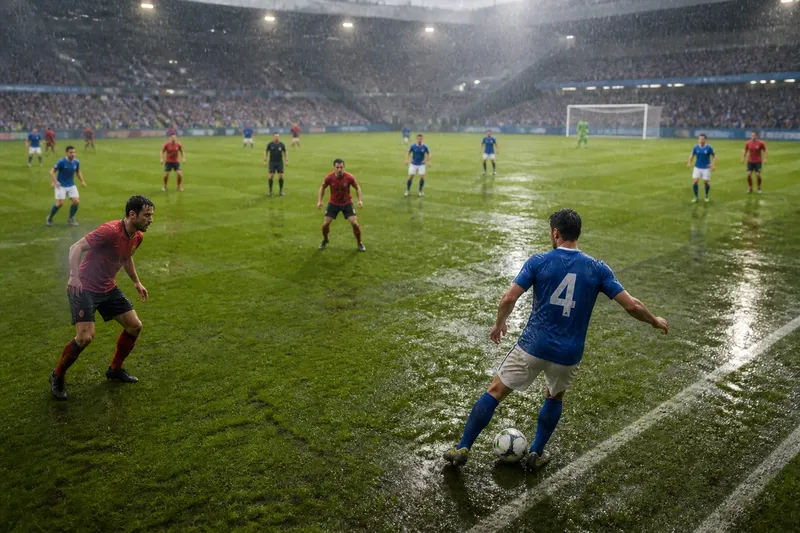
A rain-softened pitch can influence the first touches and passing choices in a football match. In the opening minutes, watch how players receive the ball, where they choose to pass and whether their movement accounts for the surface. The effect depends on the grass, the amount of water and the pace of play, so look for repeated adjustments rather than treating one awkward touch as proof of a pattern.
First-touch adjustments
Imagine a clearly hypothetical match in which steady rain has left the grass damp but not waterlogged. Both teams begin in familiar shapes: one builds from its centre-backs, while the other presses with two forwards. The surface looks slick, and a firm pass appears to carry on after reaching a defender. That observation alone cannot predict the result; it gives you a useful starting point for tracking how players adapt.
In the first minute, a centre-back receives a return pass and opens his body to play forward. The ball arrives quicker than he seems to expect. He takes a hurried touch towards the touchline, leaving his next action constrained. The important cue is what happens next: does he shorten his next touch, ask for the ball at a different angle, or repeat the same reception?
Depending on the surface and the pass, a damp patch may allow a firm ball to keep travelling after it reaches a player. Elsewhere, grass, uneven ground or a softer pass may reduce its pace. The receiver must judge both the ball and the footing beneath the supporting foot. Watch the relationship between pass weight and first touch rather than treating every misplaced touch as a technical lapse.
The pressing forwards face a related choice. They may close the centre-back quickly, hoping a hurried touch creates a loose ball, or hold their distance until the passing angle is clearer. If they rush and the defender adjusts smoothly, the press can be bypassed. If they wait, he may find a free midfielder. The changing surface is one possible influence on the timing, alongside the players’ positions and decisions.
Early build-up cues
Follow the ball from the goalkeeper through the first line of pressure. Does the goalkeeper roll it gently, or play a clipped pass that lands beyond a patch that looks especially wet? Does the centre-back receive side-on, with a clear next option, or face his own goal and need an extra touch? These details show whether the build-up is being adapted.
Say you are watching from the stand and the right-sided defender repeatedly receives the ball near the touchline. In this invented situation, his first touch runs towards the sideline on the opening attempt. On the next, he cushions it back towards the centre and passes to the holding midfielder. If the midfielder can turn and carry forward, the observable result is a safer outlet that also escapes the press. That sequence suggests adaptation; it does not mean every damp pitch calls for an inside pass.
Notice where the supporting players stand. A midfielder moving closer can offer a short outlet if a touch gets away. A winger staying high and wide may stretch the pressing line and leave room for a pass beyond it. Ask whether the receiver has more than one sensible next action. A player under pressure may struggle to control the ball if there is no clear passing option and an extra touch is needed to look up.
Passing pace matters too. Short exchanges may keep the ball near supporting players, but a cautious series of soft passes can give the press time to advance. A firmer pass can beat a line, yet it may run beyond the intended receiver. The choice is tactical as well as technical: the team weighs the available space, support and risk in each part of the pitch.
Changing duel patterns
The main contest may shift from the first receiver to the player arriving for the next pass. If a midfielder checks towards the ball, the defender can play into his feet; if the midfielder turns away, the pass may travel beyond him. Watch the receiver’s body shape and the nearest opponent’s distance. A player meeting the ball side-on may be able to protect it or redirect it with fewer adjustments.
On the flank, a winger might let the ball run into space and chase it instead of stopping it dead. Whether that works depends on the touchline, the pace of the pass and the defender’s position. The full-back must decide whether to step in or turn and cover. One player is choosing how to use the ball’s travel; the other is deciding whether to contest the first touch or defend the space beyond it.
Do not assume that a wet surface favours direct play. A long ball may skip away from a striker, while a short pass may be manageable if its pace and angle suit the receiver. Look for repeated choices and consequences. If one side keeps bypassing midfield, ask whether the forwards can hold the ball and whether support arrives. If the ball is repeatedly played short, see whether the receivers have time to turn.
Reading the surface?
What does a secure first touch look like?
The receiver guides the ball into useful space and can make the next pass without scrambling. On a damp pitch, that touch may differ from the player’s usual habit, but judge it in context: pressure, pass weight and footing all matter.
Why might a team favour short passes?
Short passes can keep possession near supporting players and limit the distance a loose touch might travel. They help only if the receiver has room and a next option; otherwise, the opposing press can crowd the ball.
When is a long pass a deliberate choice?
Look for a target moving into space, a teammate preparing for the second ball and a passer with time to choose an angle. One hurried clearance does not establish a plan; repeated, supported passes offer a clearer clue.
Can the surface affect the press?
It may influence how pressing players judge the ball’s pace and the receiver’s next touch, though positioning and timing remain important. Watch whether the press closes down the next pass or simply chases the ball after it has moved.
Following the pattern
In the hypothetical match, the centre-back’s rushed opening touch leads his side to offer a closer midfield outlet. That change helps the next few build-ups, but the opposing forwards respond by screening the central pass. The defender then chooses a firmer ball down the line. A winger lets it travel into space, and the full-back has to turn to cover. The first exchange has developed into a different duel without either side changing formation.
Now imagine the winger’s touch carries too far and the full-back reaches the ball first. The immediate outcome is a turnover near the sideline. The cause could be the pass weight, the run’s timing or the player’s reading of the surface. On the next attack, the winger checks towards the ball before accelerating; the observable result may be a more manageable reception. Track the sequence, not just the final mistake or successful tackle.
As the opening spell develops, one team might use its goalkeeper and centre-backs to draw the press, then release the ball beyond the first challenge. The other might stay compact and invite a pass towards the touchline, where its full-back can contest the receiver. Look for repeated choices in touch direction, pass weight, supporting distance and the opponent’s response.
For a useful read of a rain-softened pitch in the opening minutes, follow linked actions rather than weather alone. A poor touch can come from pressure, a difficult pass or a player’s decision; one moment rarely tells the whole story. If the same adjustment helps a team escape pressure, or the same pass repeatedly leaves a receiver exposed, you have a clearer sense of where the contest may develop.