The Second Ball: Why the Contest After a Clearance Matters
Second ball football explains how players around a clearance’s landing point can turn a defensive escape into pressure, possession or another attack.
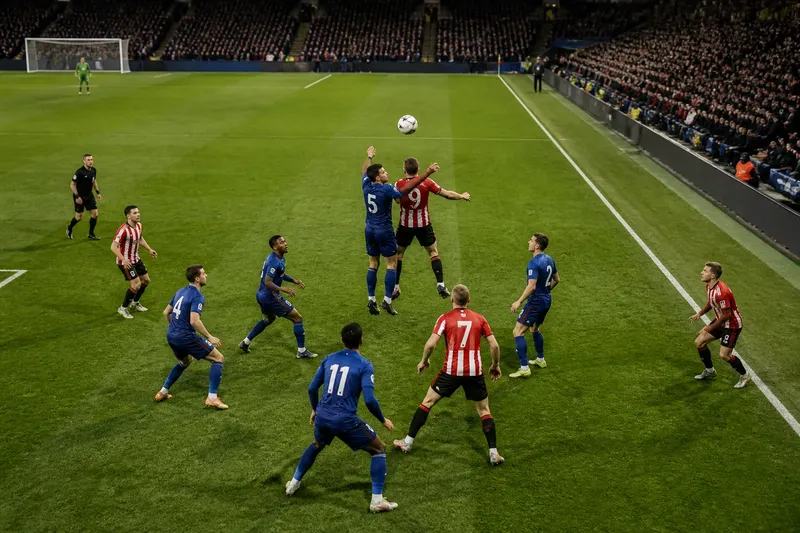
A clearance does not end an attack; it relocates the contest. Second ball football is the study of what happens next: who reaches the loose ball, who can support them, and whether the winning side can turn that moment into control. Watch the players gathering around the likely landing area, not only the ball in flight.
The details are often visible before the clearance. A forward may be ready to challenge, a midfielder may be closing the space behind them, and a defender may already be preparing for the next pass. These five cues help explain why one clearance brings relief while another simply starts a fresh wave of pressure.
1. The landing area
Begin by looking at where the ball is likely to come down. A defender under pressure may send it high and towards a touchline, while a less hurried player can aim for a forward or a channel. The destination shapes which teammates can compete for the next action.
Do not follow the ball alone. Check whether the nearest midfielders are moving towards its projected landing point, holding their positions, or being drawn elsewhere by opponents. The side that arrives with more useful options may control what follows even if its player does not win the first aerial challenge.
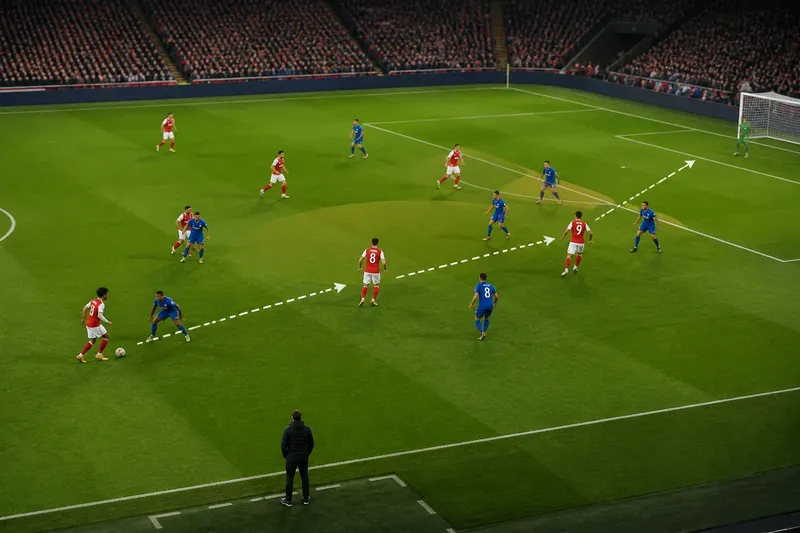
Imagine a centre-back clears towards the right touchline while both teams’ midfield lines are moving across. If the defending side’s right-sided midfielder is already close enough to contest the drop and a teammate is stationed behind him, they may recover the ball or disrupt the opponent’s first pass. If those players are still retreating, the clearance can become an immediate return attack.
2. The first challenge
The aerial duel is only one part of the sequence. A forward who cannot bring the ball down may still glance it towards a teammate, shield long enough for support to arrive, or make the defender’s contact awkward. The defender may win the header yet send the ball into a crowded area where opponents have the better follow-up position.
Watch the challenger’s body shape and the direction of the contact. A flick towards a nearby runner is different from a header that travels straight back into the space the defending team has just vacated. These small choices can turn a clearance into an organised outlet or leave the team chasing its own defensive action.
The players around the duel matter just as much as the two in the air. One may be set to collect a knockdown; another may be ready to press the receiver. If the contest is isolated, the winner can still have no safe next action.
3. The supporting ring
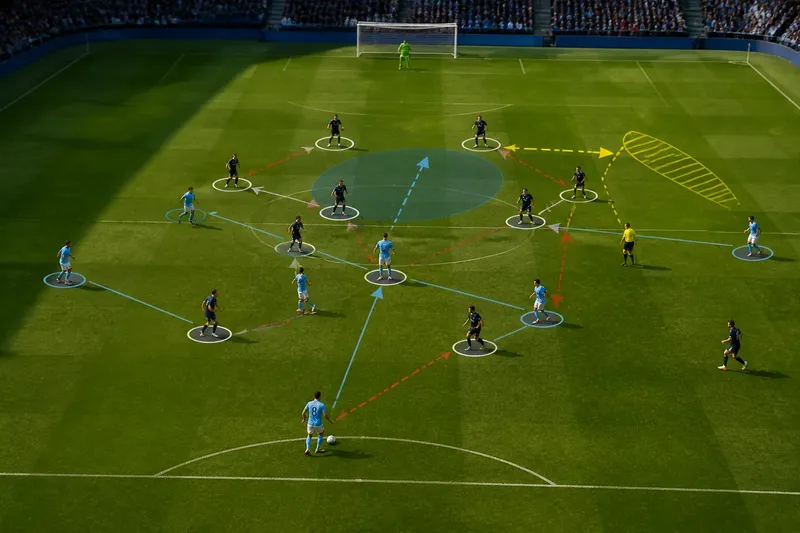
Think of the landing area as a small ring of positions rather than a single spot. The player closest to the ball contests it. Others cover the likely bounce, block the opponent’s escape route, or offer a pass once possession is secured. A compact supporting ring gives the first challenger several ways to keep the phase alive.
When a team spreads too far around the anticipated drop, its players can become separated. One wins the ball but has no nearby outlet; another is too distant to challenge for the loose ball. Conversely, an opponent may pack the space and force a hurried touch. The useful question is not simply which team has more bodies, but whether their positions connect.
Check the distance between the player challenging and the nearest teammate who can act next. Also notice whether the cover player is goal-side, in front of the landing point, or tucked behind the duel. Those positions reveal whether the team is trying to regain possession, force a loose clearance, or protect against a runner through the middle.
4. The next action
Winning the second ball is not the same as controlling the phase. A midfielder may collect it and then play safely backwards, giving the opposition time to reset. Another may turn into open space, find a forward, or switch play towards the side the defence has left exposed. The first decision after recovery shows what the team can make of the contest.
Notice the receiver’s options before the ball arrives. Is there a short pass available, a runner beyond the opponent’s midfield, or a teammate wide enough to stretch the next line? A player forced into a hurried clearance has technically regained the ball, but the attacking side may remain in control of territory and pressure.
This distinction also explains why an apparently tidy clearance can fail to provide relief. If the defending team cannot connect the loose ball to a teammate, it may have to defend another delivery before it can move up the pitch. The follow-up pass, not the height or distance of the clearance alone, often signals whether the danger has passed.
5. The pressing response
The team that does not win the first contest can still shape the next phase. A nearby player may press the receiver’s first touch, while teammates close the short outlets. That pressure can turn a clean-looking recovery into another loose ball, or force the winner to play towards an area where support is thin.
Look for the trigger. It might be the ball dropping to a particular opponent, a receiver taking a touch towards their own goal, or a pass into a crowded central space. If several players move at once, the press can contain the recovery. If only one closes while the others stay deep, the opponent may escape and carry the ball into open ground.
There is a trade-off. A team that steps forward to contest the next ball leaves space behind its midfield line. If the opponent can make a controlled first pass, a runner may attack that space. The quality of the press is therefore measured not only by whether it forces a mistake, but also by what it leaves exposed when it fails.
6. Repeated landing patterns
One loose ball can be chance. A recurring pattern tells more about the match. If clearances repeatedly fall near the same touchline, the teams may be directing play there, or one side may be unable to move the ball away from pressure. Track whether the same midfielders arrive first and whether the same team can play forward after recovering it.
Also watch how the pattern changes when a player is substituted or a team alters its pressing height. A forward who can compete more effectively may give midfielders time to advance; a deeper block may instead prioritise covering the space behind the duel. The visible change is not just who wins the header, but where the next action takes place.
In a hypothetical match, say one side keeps clearing towards the same flank and its opponents repeatedly collect the bounce. If the defending midfielders begin shifting earlier and a nearby forward offers a direct outlet, the next clearances may lead to longer spells away from their goal. The observable clue is a change in where the opponent’s first recovery happens, not an assumption that the adjustment has solved the problem.
Questions about second balls?
What counts as a second ball?
It is the loose ball available after an initial challenge, clearance, deflection or aerial contest. The phrase describes the next contest in the sequence, not a particular type of pass or a player’s second touch.
Does winning the first header matter most?
Not by itself. A team can lose the header but collect the knockdown, while the side that wins it may have no teammate close enough to take possession.
Which players should I watch?
Watch the nearest midfielders and forwards around the projected landing point, then check who supports the receiver. Their starting positions and movement often explain the outcome better than the aerial duel alone.
How can I tell who controls the phase?
Look at who makes the next deliberate pass and whether that pass moves the ball into a teammate’s control or merely returns it to danger. Territory, connected support and the receiver’s freedom to turn all help distinguish recovery from control.
Read the sequence
Second ball football is less about a single dramatic collision than the chain of positions around it. Start with the landing area, follow the first challenge, then watch the supporting players and the next pass. That sequence shows whether a clearance has created breathing space, renewed pressure, or a route into attack.
For a useful match preview, make one prediction about where the next clearance is likely to land and identify which players should be near it. Then watch whether those players arrive together and what the winner can do with the ball. The answer can change from phase to phase, but the contest after the clearance is often where the match’s next pattern begins.